Community engagement
Engaging and supporting communities
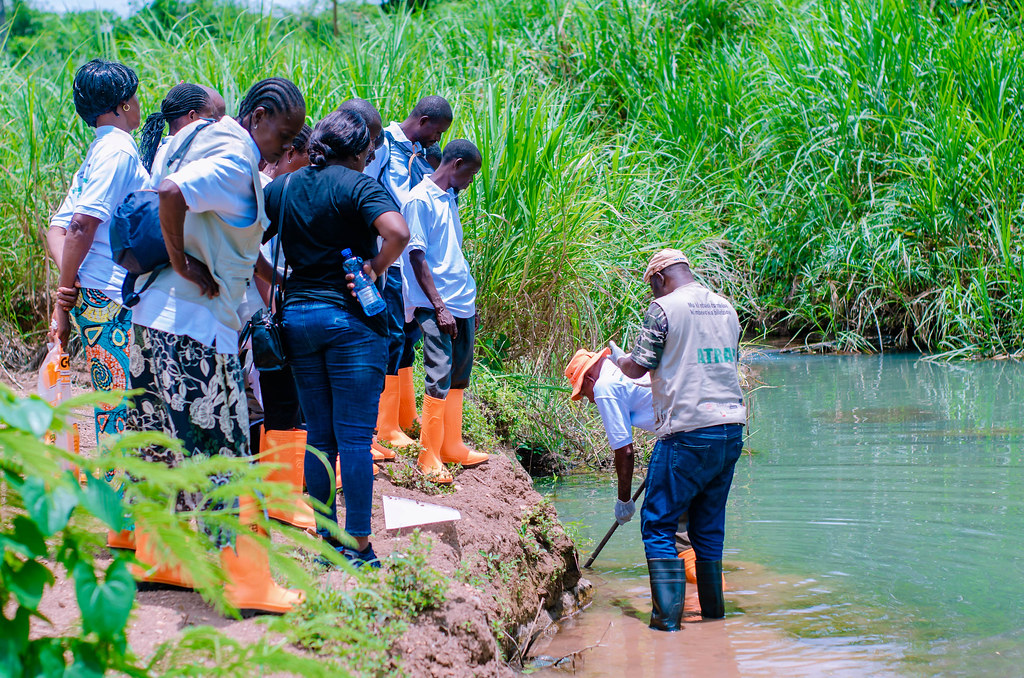
A cornerstone of ATRAP’s approach is the active involvement of local communities through citizen science. This begins with careful selection of community members, who are motivated, trusted, and rooted in our target study sites. Participant recruitment is conducted in collaboration with the local community leaders, with a strong emphasis on gender balance to ensure equitable participation. Once selected, the community members also referred to as citizen scientists undergo comprehensive training designed to equip them with the knowledge and skills to identify disease vectors, particularly freshwater snails that transmit schistosomiasis and mosquitoes responsible for malaria. They are also trained on how to collect, record, and share relevant environmental data using digital tools. These training sessions combine theoretical and practical hands-on sessions. Lastly, to enable their participation, the citizen scientists are provided with essential tools and equipment, including field kits for vector identification and sampling, smartphones for data collection and protective gear like gumboots and gloves.
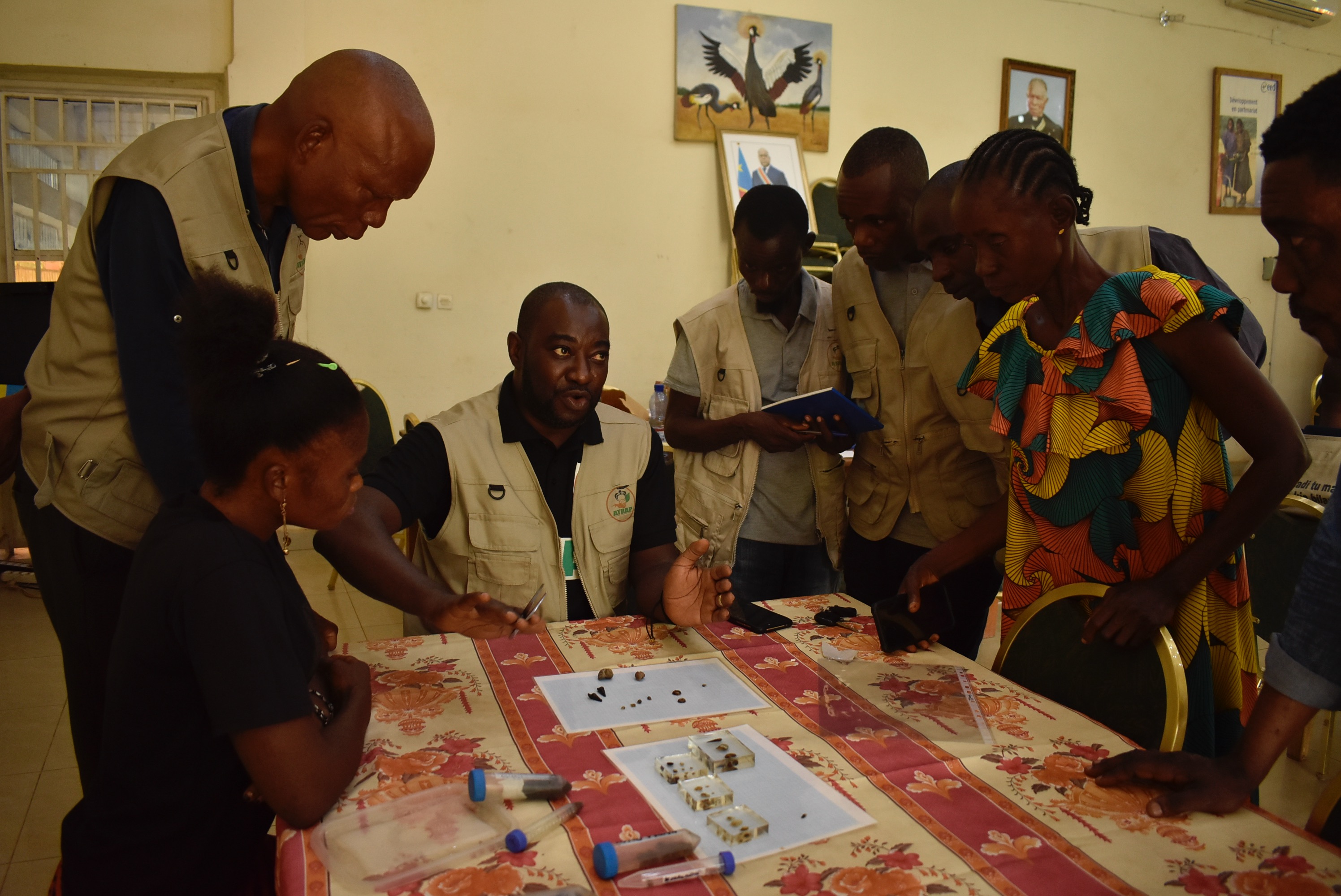
Theoretical training: Citizen scientists participating in a training session on identifying snail species that transmit schistosomiasis.
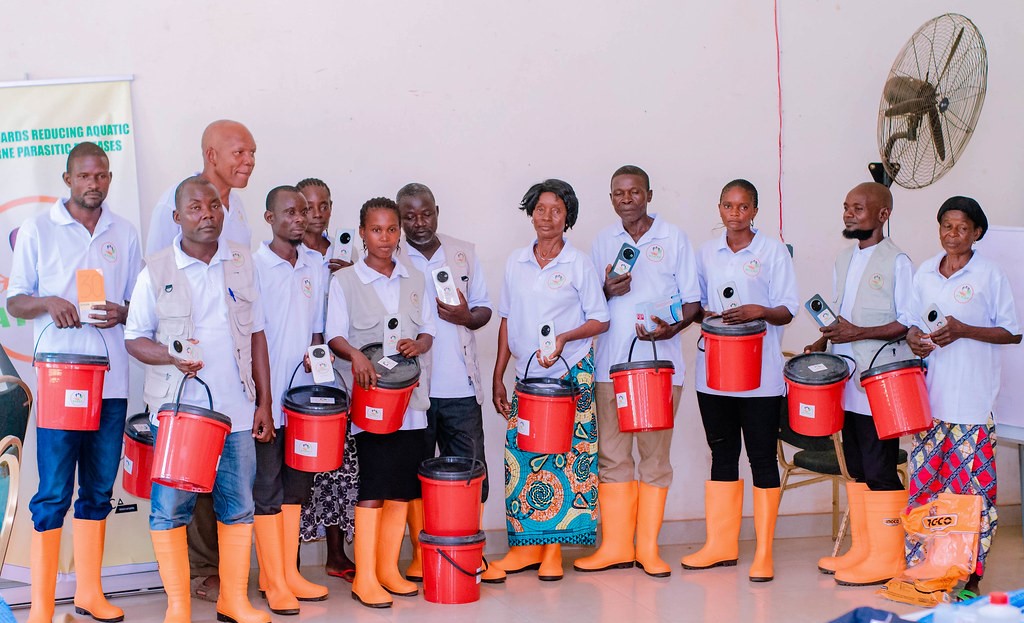
Equipped and ready: Citizen scientists in DRC posing with the tools they use for data collection.
Raising awareness
Beyond vector monitoring, the citizen scientists act as key communicators to the wider community. They lead the development of contextualised schistosomiasis awareness campaigns tailored to the specific needs and realities of their diverse communities. The preferred channels for communication ranged from door-to-door visits, drama, songs to football tournaments. These efforts have reached more than 15 communities and over 50,000 people, primarily focusing on schistosomiasis prevention and behaviour change. Read more here.
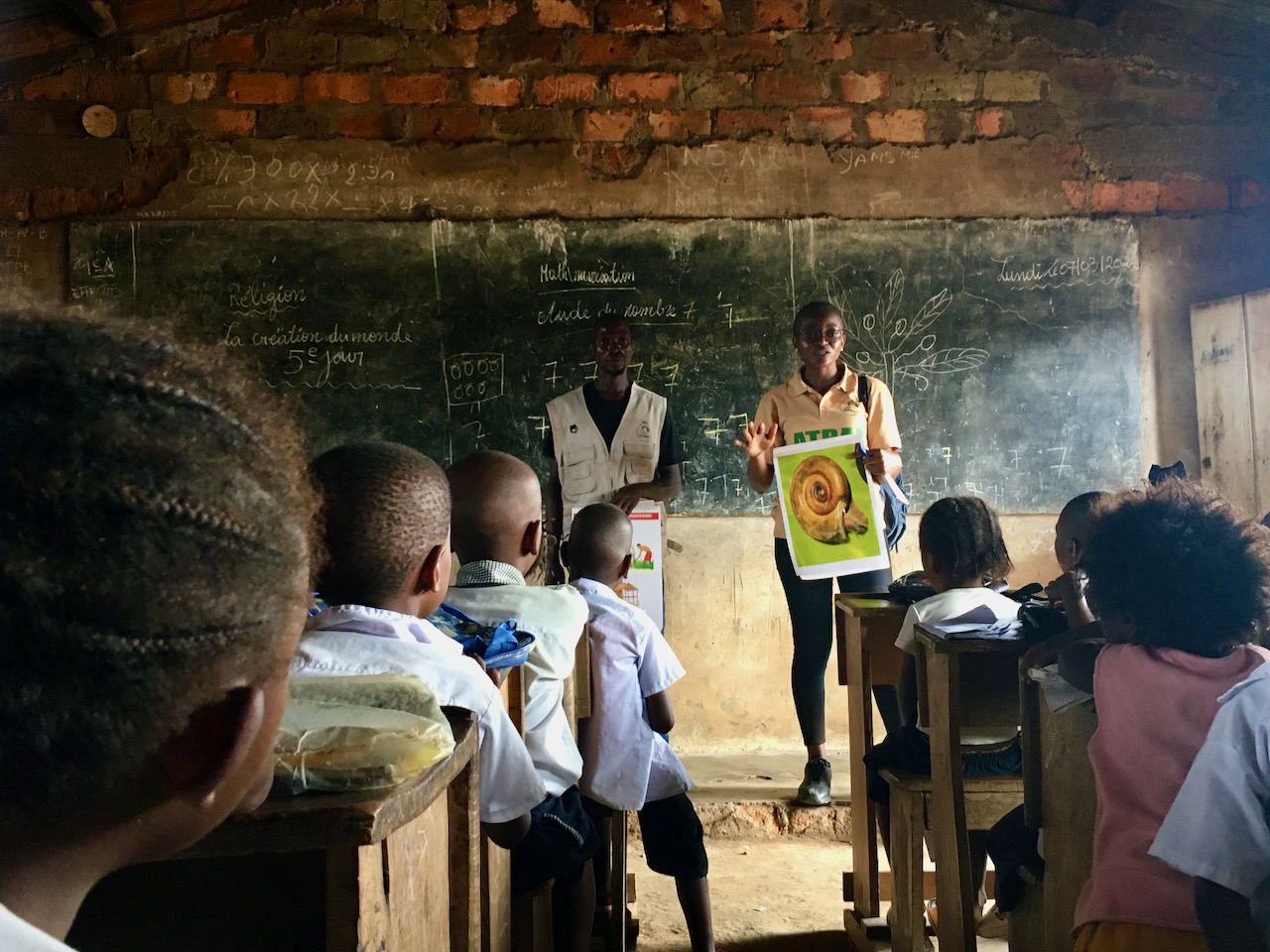
School-based outreach in DRC to introduce young learners to schistosomiasis prevention messages.
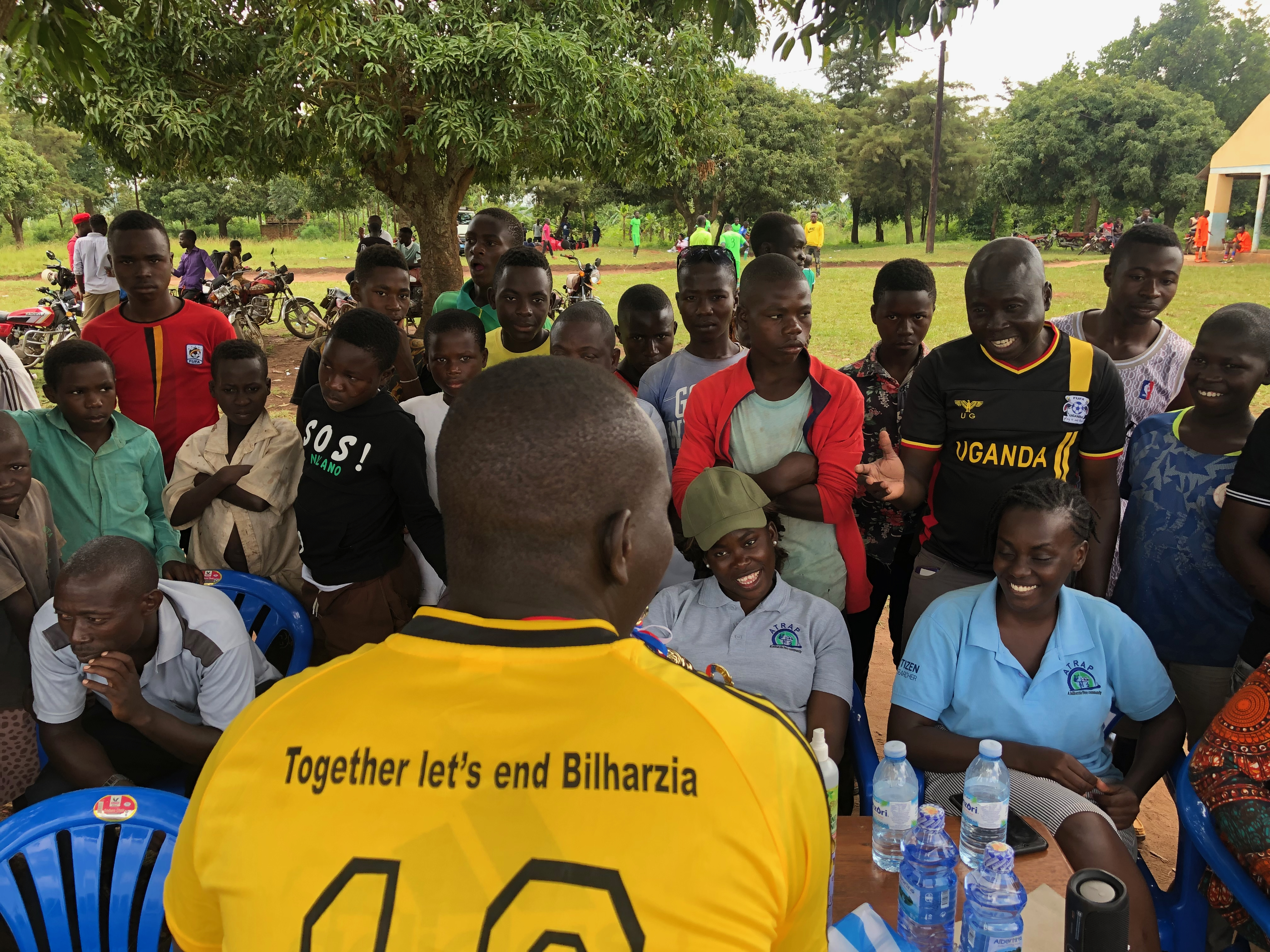
A football team member wearing a jersey featuring schistosomiasis related information in Uganda.
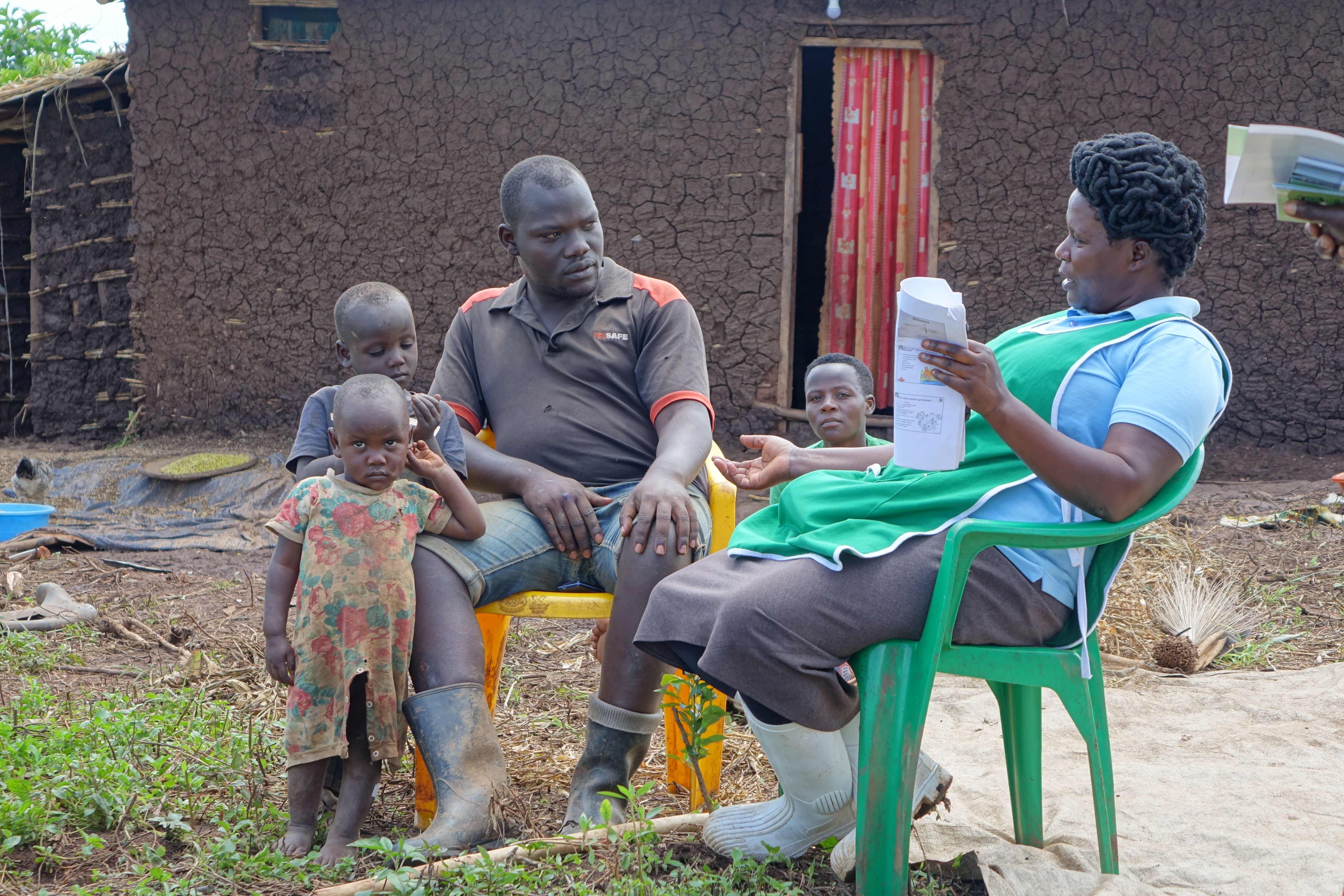
A citizen scientist conducting a door-to-door visit in Uganda to raise awareness of schistosomiasis.
Inspiring action
The awareness-raising campaigns played a crucial role in inspiring local community action. Building on key messages co-developed with citizen scientists on proper sanitation, communities developed and implemented a range of initiatives. Notably, multilingual signage discouraging open defecation installed at key water contact points, the establishment of a water committee in Uganda to advocate for the repair of broken boreholes and creative school based edutainment activities to strengthen awareness among children.
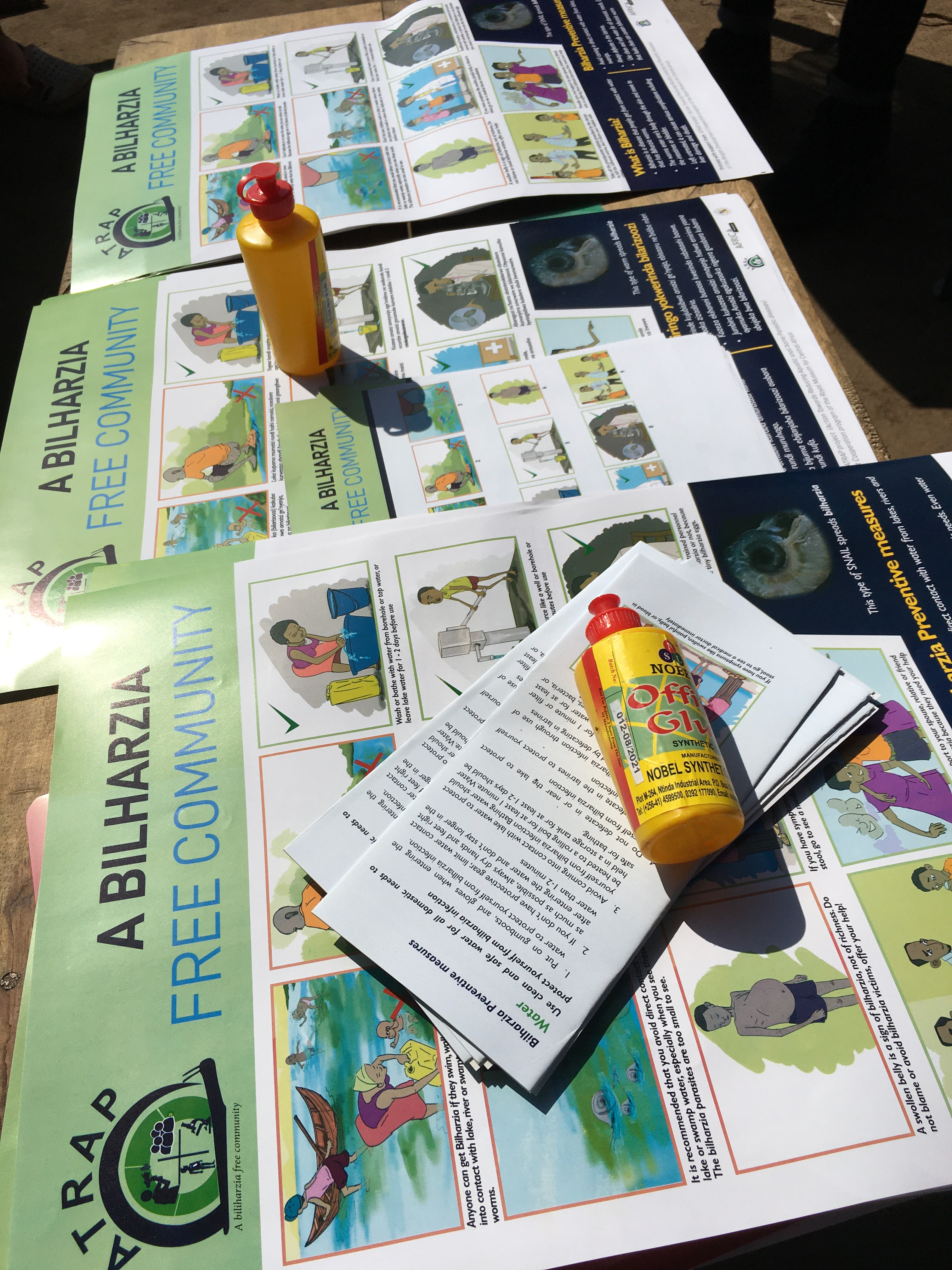
Posters with the key schistosomiasis preventative messages ready to be distributed and hang in different community locations.
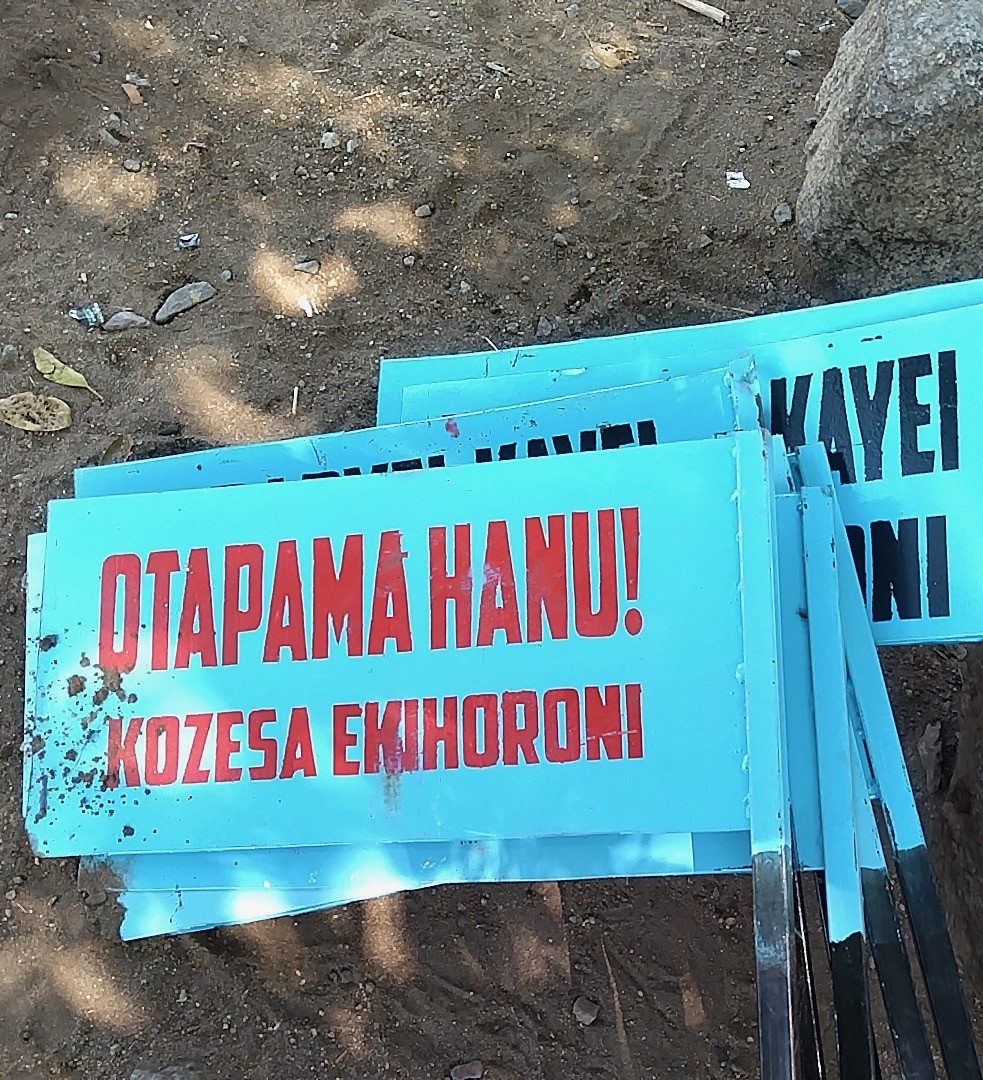
Multilingual signage discouraging open defeacation, ready to be installed at water contact areas.
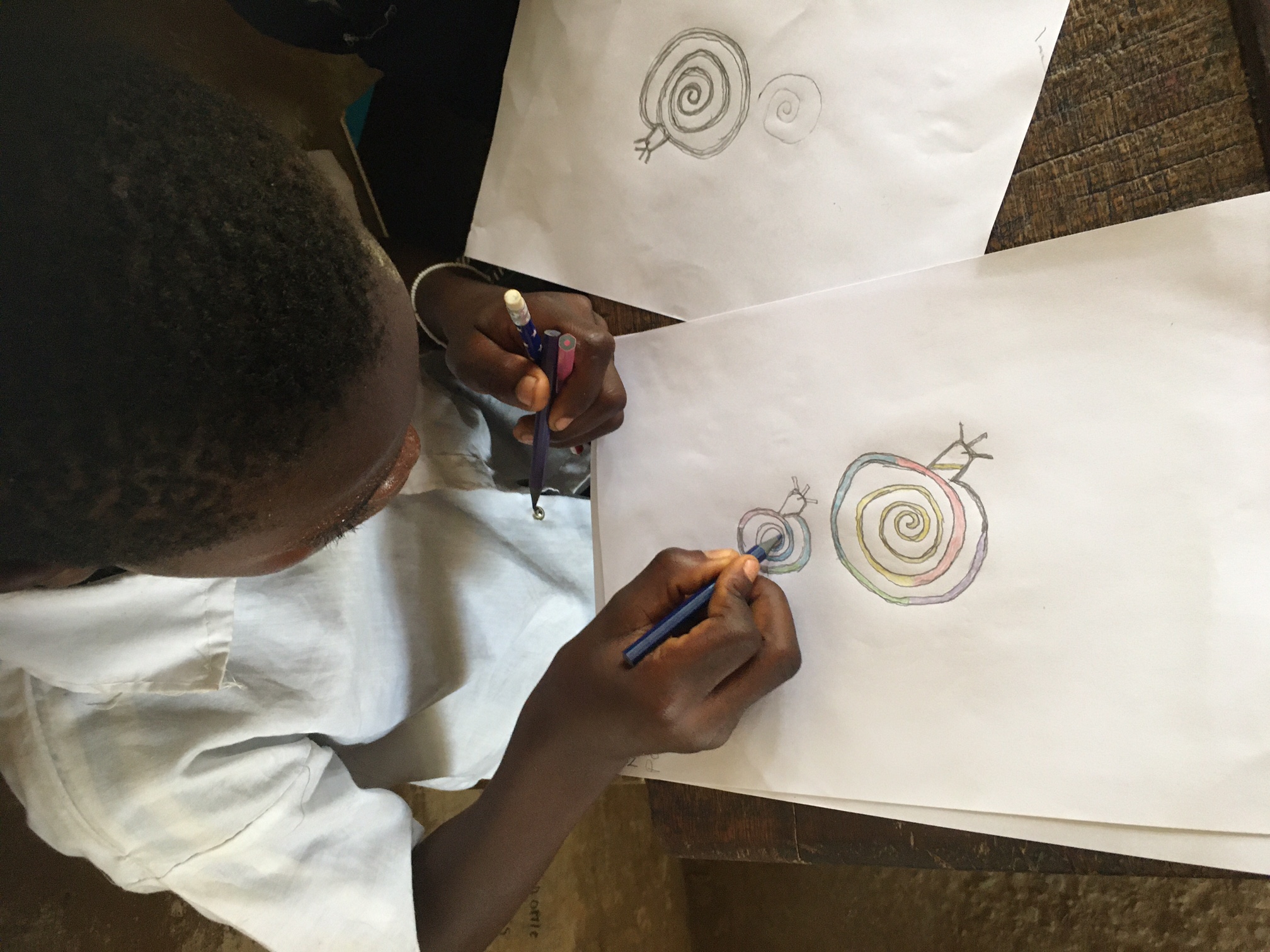
A young learner participating in a snail drawing contest in DRC as part of the creative health edutainment activities in schools.